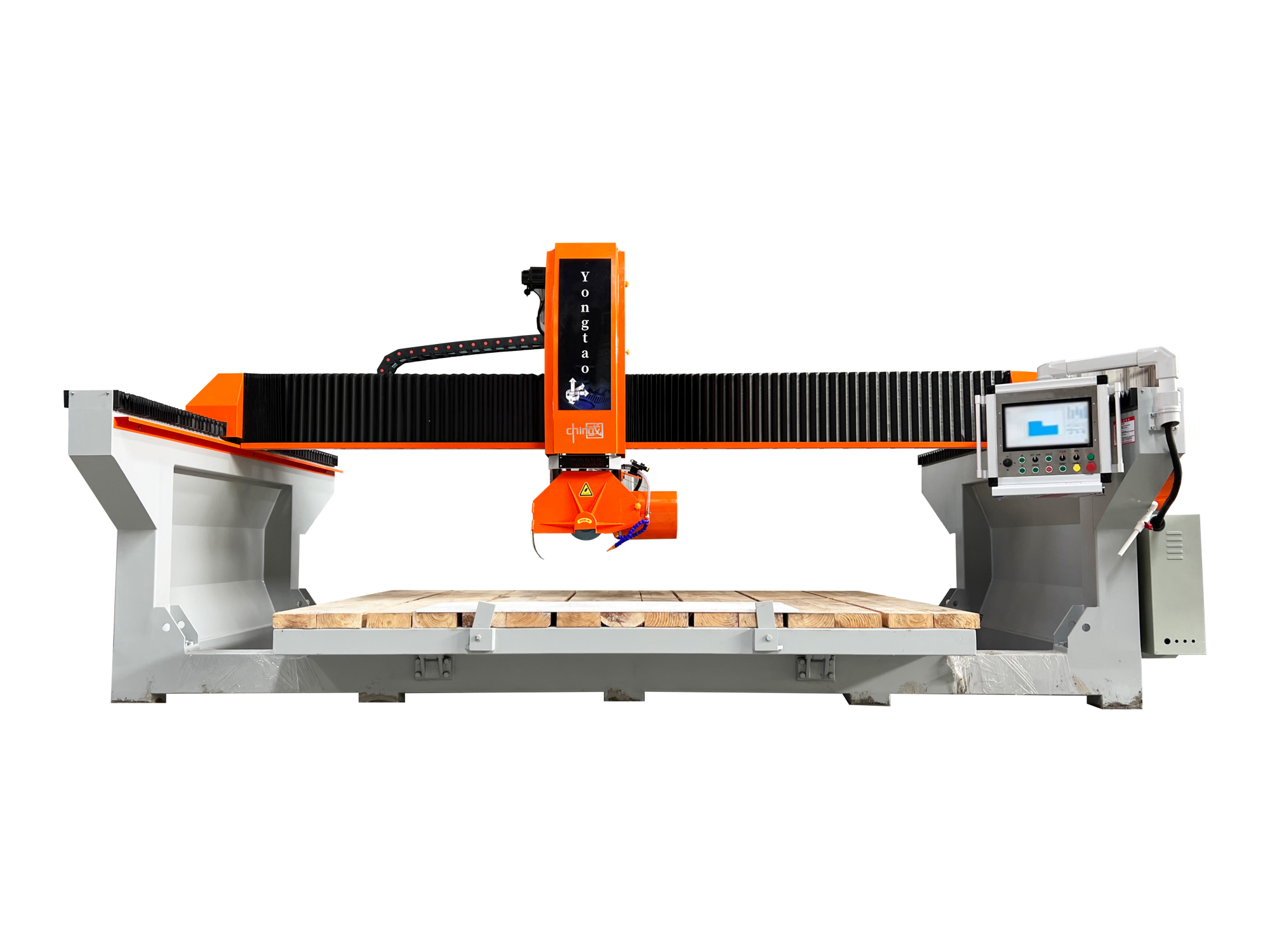
The short answer
The right stone cutting machine is determined by the work you need to finish: slab sizing, repeated straight parts, 45-degree cuts, complex openings, curves or a complete production route. Material type and actual workpiece size should be confirmed before selecting a model.
Material, finished geometry, required edge, output and factory conditions define a useful machine recommendation.
Five selection criteria
Material changes the blade, support and process recommendation. Specify whether the work is granite, marble, quartz, engineered stone or a mixed material flow.
Working envelope matters more than a headline machine size. Confirm the largest slab, smallest finished part and required Z-axis clearance.
Separate straight sizing from internal openings, tight curves and special shapes. A bridge saw and waterjet do not solve identical geometry.
State the daily output and operator arrangement. The correct configuration should suit the whole production flow, not just one fast operation.
Approve with representative work
Use the actual material and a typical finished drawing for any critical sample test. Inspect dimension, corner condition, visible edges and repeatability before confirming the final configuration.
Send this information for a useful recommendation
- Material name, finish and thickness range
- Maximum slab or workpiece dimensions
- Finished drawing, DXF or representative photos
- Straight cuts versus openings, curves and mitres
- Target pieces per shift and available operators
- Voltage, water, handling and factory-space conditions
Yongtao can use these inputs to match the machine configuration, tooling, working size and sample-test scope to the real job.